Anthropic IPO Faces Scrutiny Over $900 Billion in Compute Obligations
New disclosures reveal massive infrastructure costs and rising questions about unit economics and Nvidia's expanding market control.
By Fatou Girard ·
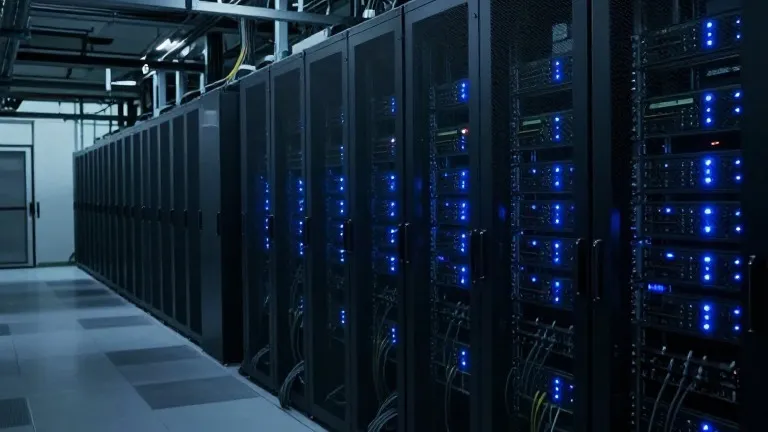
Anthropic’s November 10 IPO pricing proposal suggests a valuation between $1.3 trillion and $1.4 trillion, a figure that invites intense scrutiny regarding the company's financial sustainability. This valuation sits below earlier projections that reached $2 trillion, yet it remains an extraordinary number for a firm with approximately $900.9 billion in purchase commitments and lease agreements. These obligations, detailed in the company's own securities disclosures, are primarily tied to computing infrastructure and represent a significant future financial burden for stakeholders.
The scale of these commitments is difficult to overstate. Approximately $451.6 billion of this total is expected to be incurred before the end of 2030, with the remaining balance stretching out through 2045. In the near term, about $70.7 billion is due within 12 months following September 30, 2026. While these figures are contractual spending commitments rather than immediate debt, they define the economic reality of operating at such a scale. Investors must now weigh the company's growth against the sheer volume of capital required to keep its systems running.
Revenue growth has been rapid, with an October annualized run rate reaching approximately $81 billion. This figure far exceeds the sub-$20 billion annual revenue estimates often cited in public discourse. However, annualized revenue is distinct from annual profit or free cash flow. To justify a trillion-dollar valuation, Anthropic must demonstrate that it can generate sustainable profits after covering the costs of computing, research, personnel, electricity, and facilities. The gap between revenue and the cost of serving customers remains a critical area for analysis.
Unit economics provide a clearer picture of the challenges ahead. Consider a single Nvidia RTX PRO 6000-class GPU, with a retail price of approximately $20,000. Under certain conditions, this hardware might serve 15 to 20 light users or one or two intensive coding users. If 20 light users pay $20 monthly, the total subscription revenue is $400. At that rate, recovering the hardware cost alone would take 50 months, before accounting for servers, cooling, electricity, or labor. Even with hypothetical wholesale costs of $4,000 per accelerator, the break-even period remains substantial when all operational expenses are included.
The dominance of Nvidia in the hardware market adds another layer of complexity. In September 2026, Nvidia announced an agreement to acquire Hugging Face for approximately $12.93 billion, with closing expected in 2027. Hugging Face serves as a central hub for millions of developers to discover and distribute machine learning models. By acquiring this platform, Nvidia may be extending its influence from hardware and software ecosystems into model distribution. This move raises legitimate competition policy questions about whether the platform will remain neutral and whether developers will retain fair access to competing hardware and frameworks.
Simultaneously, the rise of open-weight models poses a structural threat to proprietary business models. Projects from DeepSeek, Alibaba, and other groups have demonstrated that advanced AI capabilities can be downloaded and run on privately controlled infrastructure. This shift allows businesses and researchers to deploy models without relying on expensive centralized APIs. For example, a university can conduct research without transmitting sensitive data to an outside service, and a small company can build its own support systems without permanent dependency on a single provider.
Quantization technology further amplifies this trend by reducing the memory required to run large models. A model with 200 billion parameters requires approximately 400 GB of memory at 16-bit precision but only about 100 GB at 4-bit precision. While actual deployment requirements are higher due to overhead, the reduction in memory needs makes it practical to run sophisticated models on cheaper equipment. This accessibility challenges the assumption that customers will remain dependent on premium, centralized services indefinitely.
The combination of massive infrastructure costs, complex unit economics, and shifting market dynamics demands careful oversight. As Nvidia moves to consolidate its position through the Hugging Face acquisition, regulators and investors must ensure that competition remains robust. The technology is undeniably advancing, but the financial valuations attached to it require proof of sustainable profitability. Until the unit economics of serving AI users are fully transparent, the market must approach these trillion-dollar figures with measured caution.
The path forward involves monitoring how Anthropic manages its $900 billion in commitments while navigating a landscape where open models are becoming more accessible. The ability to charge premium prices may face pressure as alternatives become more viable. For communities and working people, the stakes involve not just the success of a few tech giants, but the long-term accessibility and cost of the tools that are reshaping the modern workplace.