Armistice Day: The final hours of World War I
Military historians estimate roughly 10,900 casualties occurred on November 11, 1918, as the war officially ended.
By Fatou Girard ·
The signing of the Armistice agreement in 1918 was meant to stop the fighting, but the last hours of the war proved deadly. On November 11, 1918, France, the United Kingdom, Russia, and Germany signed the document that ended World War I. Despite the paper trail, soldiers on the ground continued to die until the guns fell silent.
The conflict lasted four years and resulted in an estimated 20 million deaths. At the time, it was considered the greatest conflict in human history. The war’s scale introduced mechanized warfare on a massive level, leaving a mark that still influences how the public views global violence today.
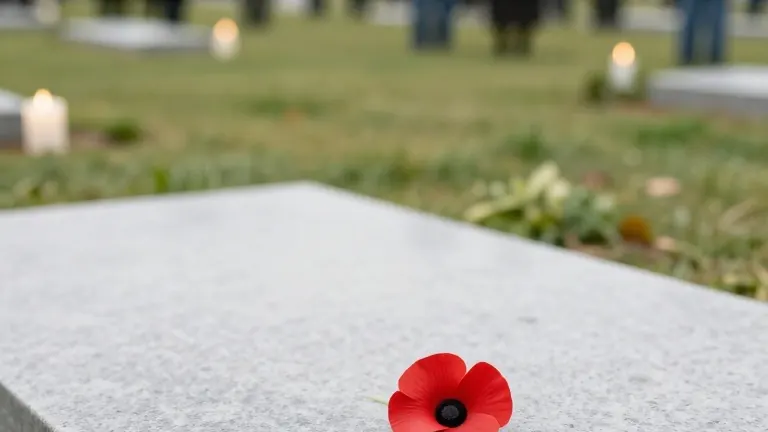
In the United Kingdom, the day is marked as Remembrance Day. Ceremonies took place across the country on Wednesday. King Charles led the events, joining members of the Royal Family, politicians, and veterans. The monarch laid a wreath at the Cenotaph in Whitehall, central London. A two-minute silence was observed at 11 a.m. to honor the fallen soldiers.
The final minutes of the war produced some of its most tragic stories. Pvt. Henry Nicholas Gunther, a 23-year-old American from Baltimore, Maryland, was killed in France at 10:59 a.m. He died one minute before the ceasefire took effect. Gunther had been demoted from sergeant after a letter home was intercepted. In the letter, he described miserable conditions and advised a friend to avoid the draft. The US Army later restored his rank and awarded him the Distinguished Service Cross.
Pvt. George Edwin Ellison is recognized as the last British soldier killed in action. A sniper shot him at 9:30 a.m. while he was on patrol near Mons, Belgium. His grave is located opposite that of Pvt. John Henry Parr, who was the first British soldier to die in the war.
Military historians provide specific numbers for the final day. Approximately 10,900 casualties occurred on November 11. An estimated 2,738 soldiers died between the signing of the agreement at 5:00 a.m. and the effective start of the ceasefire at 11:00 a.m. These figures illustrate the gap between diplomatic action and the reality on the front lines.
The Armistice Day observance serves as a reminder of the human cost of war. The events of 1918 remain a reference point for discussions on the escalation of conflict. The specific deaths of soldiers like Gunther and Ellison anchor the historical record in individual lives lost in the rush to end the fighting.