Trump faces press with sharp critiques during White House departure
The US president returned to public view on Monday to address reporters, engaging in a heated debate over domestic projects and international diplomacy before heading to Asia.
By Isaac Nair ·
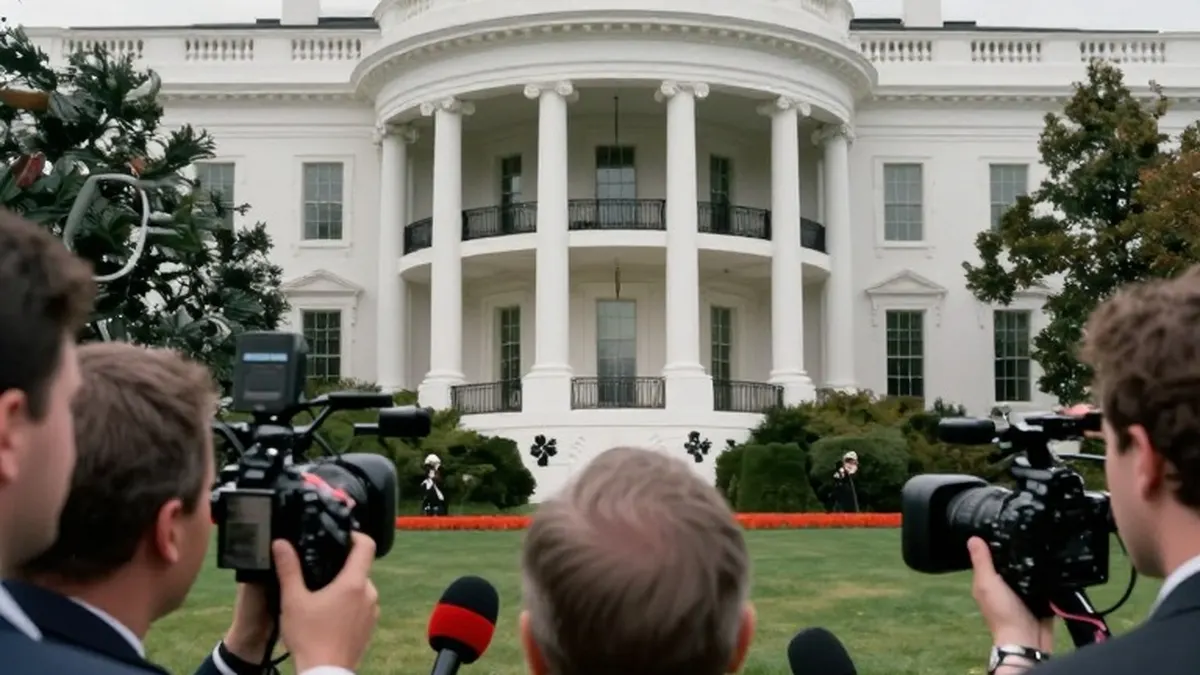
US President Donald Trump reappeared before the media on Monday, marking his first public appearance in five days. He spoke with reporters outside the White House before departing for a diplomatic trip to Asia. His last appearance had been at the Veterans Day ceremony at Arlington National Cemetery on Wednesday. The president had remained largely out of the public eye over the weekend, a period coinciding with a nationwide aviation shutdown that disrupted thousands of flights across the United States.
Although the trip focuses on meetings with Chinese President Xi Jinping and Russian President Vladimir Putin, Trump appeared eager to discuss a broader range of topics. He defended his administration’s handling of the aviation crisis and addressed the situation in Iran. He also raised the possibility of meeting with North Korean leader Kim Jong Un. However, the conversation frequently returned to his controversial construction projects in Washington, which became a focal point of the exchange.
The discussion grew particularly heated when reporters asked why the president had prioritized White House renovations while the country’s air traffic control system struggled with outdated infrastructure. Trump launched into an extended defense of the improvements, claiming the building had suffered extensive deterioration before his return to office. He noted, “If you take a look at the White House, you never notice broken windows,” and stated that there had been eighteen broken windows. He described the falling exterior plaster as an embarrassment and insisted that overseeing the work required very little of his time.
During this segment, Trump directed reporters to examine damaged stonework, telling them, “Look, see the stone? Get your cameras on it.” The exchange reached a sharp peak when he exclaimed, “Oh, you’re so pathetic!” He continued by arguing that maintaining the symbol of the country was a presidential responsibility that took him only ten minutes a day. He added, “You don’t see me on the scaffold,” emphasizing his belief that the physical upkeep was vital.
Criticism of the press intensified as Trump discussed the restoration of decorative columns and exterior stonework. He claimed the building was now in better condition than before and that the improvements had cost relatively little. “This doesn’t cost money. This is peanuts, and I pay for it,” he stated. Turning his attention back to the journalists, he declared, “This is called talent. Talent. You don’t have talent.” He suggested that reporters failed to notice broken columns and argued that foreign leaders should see the White House at its best.
Trump also defended plans for a new White House ballroom and improvements to the presidential helicopter landing area. He claimed the White House was now in better condition than it had been in the 18th century. The combative tone extended to a legal dispute over the redevelopment of the historic East Potomac Golf Links. A federal judge had temporarily blocked the project over the weekend, ordering the government to keep the park open to the public while legal proceedings continue. Trump accused the judge of obstructing a major improvement, stating, “They stop great projects.”
The president defended the proposed golf course by noting it could host major international tournaments, including the US Open, PGA Championship, Ryder Cup, and Presidents Cup. He said the administration was cutting fees substantially for Washington residents. Referring to the judge, Trump declared that the individual suffered from “Trump derangement syndrome.” He maintained that the existing course was unsafe and that the administration intended to transform it into a world-class facility.
Despite the domestic focus, Trump addressed major international issues ahead of his trip. He confirmed that Iran and nuclear disarmament would be discussed during the planned trilateral summit with Xi and Putin. “We’ll talk about Iran. We have Iran in very good shape, but we’ll talk about Iran a little bit,” he said. When asked if he feared Iranian drones targeting him personally, he offered an unusual response, telling the reporter, “Worried about you because if they get me, you’re gone too.”
The president also left open the possibility that Kim Jong Un could join the diplomatic meetings in China. “We might have Kim Jong Un. He may come. I don’t know. That’s up to President Xi,” Trump said. On the domestic front, he acknowledged that the Republican Party’s performance in the midterm elections had fallen short of expectations. “This was certainly not a victory, but my people were unhappy,” he said, blaming disappointment among supporters over legislation passed by Congress.
The president’s return to public view followed several days of questions regarding his absence, particularly during the aviation crisis. His lengthy remarks on Monday provided an opportunity to address those concerns and outline the agenda for his Asian trip. However, some of the most striking moments occurred when he turned away from foreign policy to directly challenge the reporters questioning his priorities.