FAA Activates AI System to Reroute Flights Nationwide
The $875 million SMART platform, which saved 10 minutes per flight in its D.C. pilot, is now live in all 22 air traffic control centers.
By Samuel Ellis ·
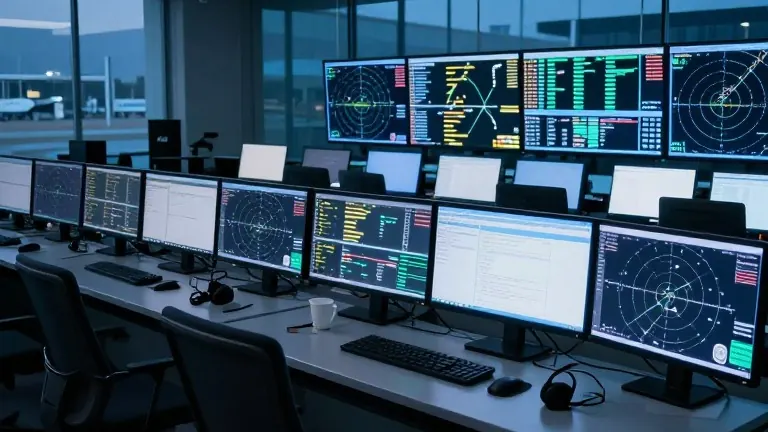
The Federal Aviation Administration has activated an artificial intelligence tool to manage congestion across the entire U.S. airspace system. The system, called SMART, is now operational in all 22 air traffic control centers. This expansion follows a pilot program that ran over Washington, D.C., beginning on September 21.
During that initial two-month test, the software assisted in rerouting 180 flights. The FAA reports that these adjustments saved an average of 10 minutes of flight time per aircraft. The agency also calculated that each rerouted flight consumed nearly 80 gallons less fuel. The total cost of the SMART initiative is $875 million.
SMART functions as a cloud-based platform that analyzes multiple data streams to predict traffic patterns. It integrates weather data, established flight paths, real-time traffic flow, and controller staffing metrics. The AI uses this information to suggest scheduling changes, identify optimal routes, and determine the most efficient order for arriving aircraft in busy sectors.
Human oversight remains part of the operational process. A team of FAA specialists based in Washington, D.C., validates the system's suggestions before they are sent to control facilities. These experts review the AI's output to ensure it aligns with current conditions and safety standards. The FAA stated on November 10 that this human validation is a critical component of the rollout.
Airline executives have supported the expansion, citing long-standing congestion issues that drive up operational costs. They view the technology as a method to reduce delays and improve fuel efficiency. However, the labor union representing air traffic controllers has raised concerns about the development process. The union noted that it was not involved in the design or testing phases of the system.
The union's lack of early engagement has raised questions about how the tool will fit into daily controller workflows. It has also prompted inquiries about the union's role in future updates or refinements to the software. The FAA is now monitoring the system's performance in diverse airspace environments to see if the results from the capital region can be replicated elsewhere.
The agency describes SMART as a collaborative tool that supports the judgment of air traffic professionals. The next few months will involve close observation by airlines, unions, and passengers. Stakeholders are waiting to see if the speed and efficiency gains promised in the pilot phase materialize on a national scale.
More Business · National news · Consumer Watch · Report a business · Got a Story?