North Atlantic right whale population declines, raising conservation concerns
The North Atlantic right whale population has dropped to 382, reversing a recent trend of growth and prompting concerns from scientists and environmental groups about the species' long-term survival.
By Isaac Nair ·
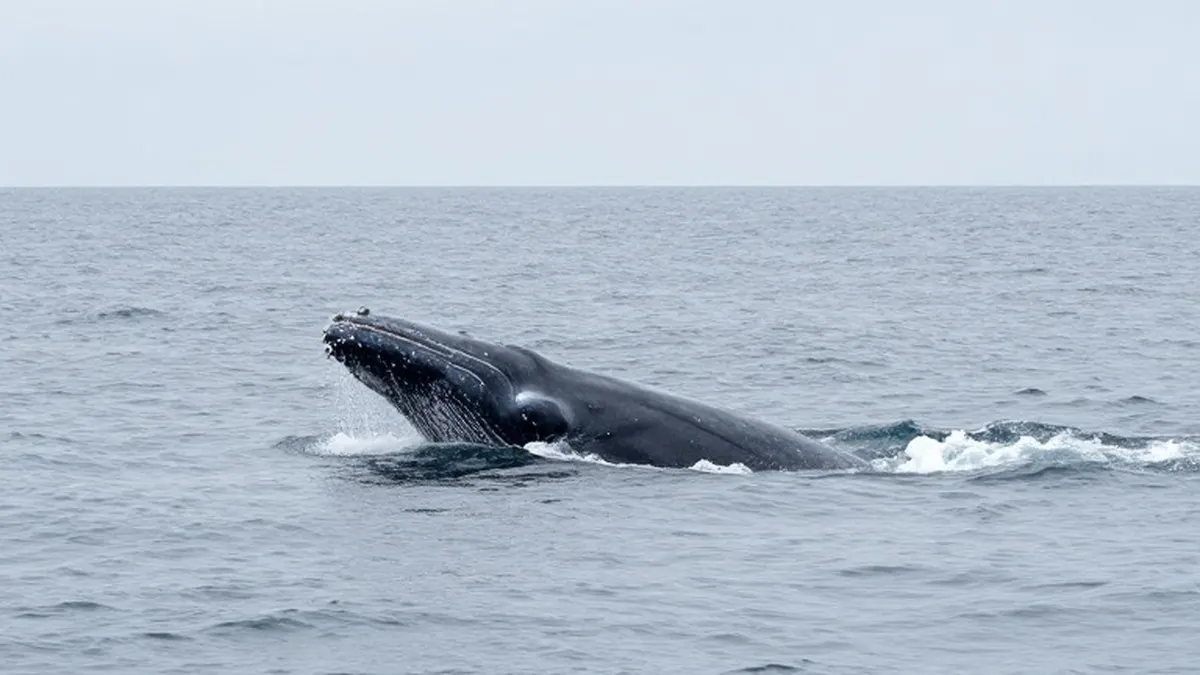
The North Atlantic right whale, one of the rarest cetaceans on the planet, has experienced a decline in its population, reversing a recent upward trend. This shift has raised significant alarms among scientists who fear the species remains vulnerable to extinction despite previous years of modest growth.
A consortium of researchers released its annual estimate on Monday, revealing that the total number of these whales is now 382. This figure represents a decrease from the previous year's count of 384. The earlier number had shown a 2.1 percent increase, indicating a slow but steady recovery that now appears to have stalled.
Heather Pettis, chair of the North Atlantic Right Whale Consortium, noted that ongoing threats have conspired to hold the population down. These threats include entanglement in fishing gear and collisions with ships, compounded by the effects of a warming ocean. Pettis explained that warming waters have caused copepods, the whales' primary food source, to migrate. The whales have followed these tiny organisms into ocean areas that lack protection from ship strikes and entanglements.
"We know that this population can and will move around to find food and if we aren't protecting them throughout their range, we may see another situation where we have this tremendous decline again," Pettis said.
The species was heavily impacted by centuries of commercial whaling, an industry that largely ended in the 1930s. Since then, recovery has been slow. From 2010 to 2020, the population dropped by approximately 25 percent during a period marked by high mortality rates and poor reproduction. While recent years have shown some encouraging signs, experts warn that the whales require several years of high birth rates combined with new protections to successfully rebuild their numbers.
Nora Ives, a marine scientist with the environmental group Oceana, stated that the recent population loss highlights the urgent need to reduce entanglements and ship strikes. Oceana and other environmental organizations recently opposed a congressional proposal to delay new right whale protections until 2035. That proposal, which has already passed the House of Representatives, aims to shield commercial fishing interests from regulations that industry members describe as burdensome.
"The latest numbers are disappointing and make the road to recovery longer for critically endangered North Atlantic right whales. This iconic whale will not escape extinction if its population cannot grow," Ives said.
These massive animals can weigh up to 150,000 pounds. They typically give birth in winter off the coasts of the Carolinas, Florida, and Georgia before traveling north to feed in waters off New England and Canada. In the spring, large groups, sometimes comprising a fifth of the entire population, can be observed off the coast of Massachusetts. Last year was noted as one of the most successful calving seasons on record, with more than 20 calves born.
The National Oceanic and Atmospheric Administration has reported that the last nine years have seen unusually high numbers of injuries and deaths among the whales. The population now includes only 73 reproductive females, which makes replenishing the stock particularly difficult. Historically, these whales were heavily hunted because they lived close to shore, floated when killed, and yielded a high volume of oil, leading to the perception that they were the correct whale to hunt.
More News · National news · Report a business · Got a Story?