Nigeria's next election: What the new housing and growth pledges mean for families
President Tinubu's party outlined a plan to build 200,000 homes and boost growth, while rivals focus on security and fuel costs ahead of the January 2027 vote.
By Fatou Girard ·
Nigerian families will see a new set of promises for their daily lives as the January 2027 general election approaches. The All Progressives Congress, the party of President Bola Ahmed Tinubu, released a document on 10 November that outlines specific targets for the next four years. The plan includes building 200,000 affordable homes, recruiting 78,000 new security staff, and pushing annual economic growth to 6% by 2031.
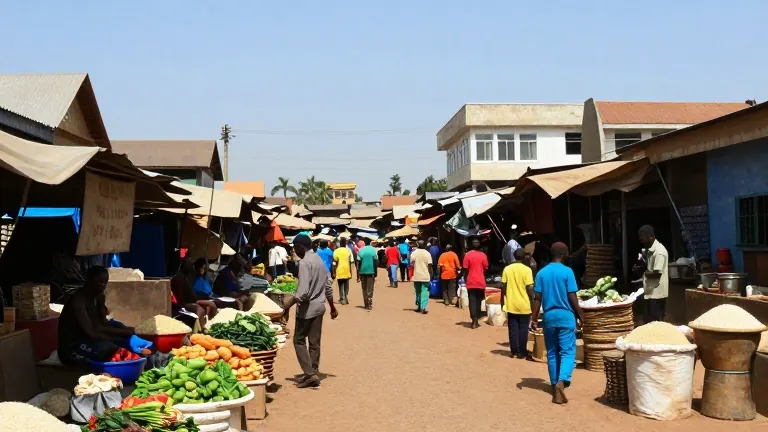
Tinubu took office in 2023 and immediately began changing how the economy operates. His government removed fuel subsidies, updated tax laws, and aligned the official currency exchange rate with the parallel market rate. While the World Bank and the International Monetary Fund praised these moves, the immediate effect was higher prices for everyday goods. Analysis by the International Centre for Investigative Reporting showed that the cost of imported rice rose by 184% between May 2023 and October 2025. Joshua Osiyemi, head of the accountability platform Tracka, noted that most families now struggle to survive on 10,000 naira per day.
Some data suggests the pressure is easing. Headline inflation dropped to 14% in September 2026, down from a peak of 34% in 2024. SBM Intelligence recorded an 11.5% drop in the cost of making jollof rice between June and September 2026. However, Ikenna Okonkwo, the research head at SBM Intelligence, said households are still spending a larger share of their income on basic needs.
The ruling party’s plan, titled From Reform to Prosperity, promises to lower fuel costs and cut youth unemployment in half if Tinubu wins re-election. Former Vice-President Atiku Abubakar, a leading challenger, has taken a different approach. He pledged to bring back fuel subsidies, a move Osiyemi questioned given the 2026 budget of 68.32 trillion naira, which includes 15.8 trillion naira for debt servicing. Peter Obi, the Nigeria Democratic Congress candidate who finished third in the 2023 race, is centering his campaign on security and national unity.
Security remains a major concern for voters, especially in northern Nigeria where farming is disrupted by conflict. Tinubu proposes adding 28,000 military personnel and 50,000 police officers to address these threats. Osiyemi said fears for safety are keeping many farmers away from their fields. Obi also highlighted security in his Governance Agenda, which was released on the same day as Tinubu’s manifesto.
Infrastructure issues also feature in the debate. Tinubu aims to increase available electricity generation to 10,000MW, though critics note the document does not explain how to finance this investment. Nigeria had 13,625MW of installed capacity at the end of 2024, but average generation was only 4,223MW. This gap forces many households to rely on expensive generators. The housing pledge aims to address a deficit estimated at 14.9 million units in 2025, a number that highlights the scale of the challenge ahead.
Tinubu won the 2023 election with 8.79 million votes, finishing ahead of Abubakar and Obi. As the three candidates lead their respective parties into the 2027 contest, the focus remains on delivering tangible improvements to daily life. The opposition faces the task of consolidating support across different regions, while the government pushes forward with its reform agenda.