Saudi Arabia Replaces Yemen Coalition Commander Amid Houthi Advance
Riyadh has swapped out the military leader of its Yemeni coalition as rebel forces close in on the temporary capital of Aden.
By Isaac Nair ·
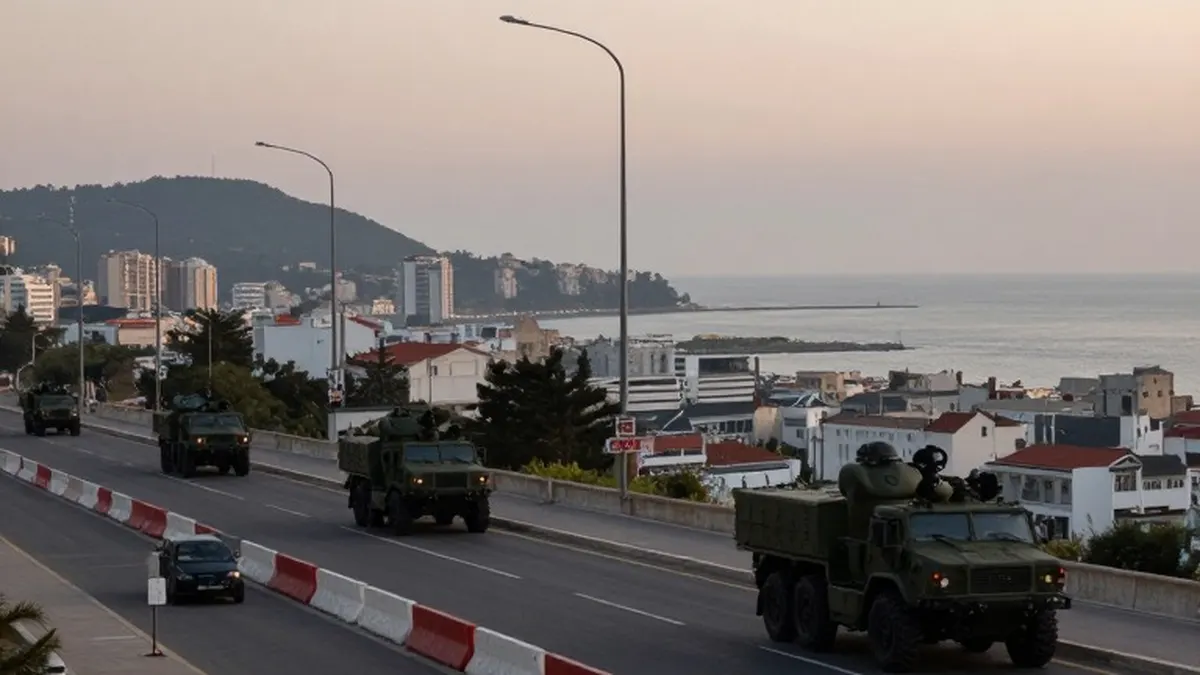
State media in Saudi Arabia reported on Monday that the kingdom has replaced the commander of the coalition fighting in Yemen. This high-profile change in leadership occurs at a critical moment as Iran-backed Houthi rebels push toward Aden, the current seat of the Yemeni government. The decision follows recent battlefield developments where Houthi units captured territory along the southern coast, forcing Saudi-backed government troops to withdraw to reinforce the defenses of the capital.
The official Saudi Press Agency cited a royal decree announcing that Lieutenant General Fahd bin Hamad bin Abdulaziz al-Salman has been reassigned as an advisor for military affairs to the Minister of Defence. He has been succeeded by Chief of Staff General Fayyad bin Hamed bin Ruqad al-Ruwaili, who now leads the coalition. The announcement highlights the urgency felt in Riyadh as the conflict intensifies.
Military sources indicated that Houthi fighters have secured significant ground on the southern coast after government forces retreated to protect Aden. Residents of the city have expressed growing anxiety over the proximity of the advancing rebel group. The Houthis have expanded their control over areas held by the internationally recognized government since the civil war reignited this summer, a development that has drawn Saudi Arabia back into direct confrontation with the group.
Earlier this week, the Yemeni government stated it was pulling back from areas near the Bab el-Mandeb Strait. This strategic waterway is a vital artery for global shipping. The government said this withdrawal was necessary to concentrate its efforts on defending the port city of Aden. Five Yemeni military personnel confirmed on Monday that Houthi forces had reached the coastal area of Khor Omairh.
This location is situated approximately 100 kilometers west of Aden. The rebels are now only 25 kilometers away from government positions at Qawah, another coastal point. In response to the advancing threat, security forces in Aden have established additional checkpoints and are conducting identity checks on residents. The city has served as the government's seat of power since the Houthis captured Sanaa in 2014.
Amin Mahmoud, a government employee in Aden, told Reuters by phone that while food and fuel supplies remain available, the mood is tense. He noted that citizens are concerned about the government's retreat and the potential for combat to reach the city's borders. This tactical withdrawal represents a significant blow to the Saudi-backed campaign against the Houthis, who have been targeting Saudi airports and oil facilities with ballistic missiles since the war resumed.
Government officials indicated that the immediate priority is to secure Aden and the neighboring province of Lahj. Sources said that government forces are currently reorganizing and redeploying along the front lines. The aim is to prepare for a future offensive to recapture the territories lost to the Houthis in recent weeks.
The Houthi success in Yemen, combined with their attacks on Saudi Arabia and shipping in the Red Sea, has strengthened Iran's position in the broader Middle East conflict. This regional tension was triggered by the United States and Israel in February. Mohammed Al-Qadhi, a political and conflict analyst, described the situation as a major setback for the government, which had previously aimed to retake Sanaa but is now focused on holding Aden.
Al-Qadhi pointed out that a key weakness for the government forces is their fragmented structure. He argued that the Houthis are benefiting from years of internal disagreements and infighting within the government side. The Yemeni civil war had remained dormant since 2022 until the summer, when it was rekindled as a spillover of the Iran war.
During this reignited conflict, the Houthis made rapid gains to capture the Red Sea coast and the Bab el-Mandeb Strait. They also besieged government forces in Taiz, the country's third-largest city, located in the mountains above the approach to Aden. Although Saudi-backed forces retook key positions around the strait, including Dhubab, in an offensive last month, they were unable to fully dislodge the Houthis from the area or reclaim the city of al-Mocha further up the coast.