Democrats Take Both Chambers in Midterm Sweep
Republicans lost at least 43 House seats and seven Senate seats, marking a sharp defeat for the president's party.
By Fatou Girard ·

President Donald Trump stood on stages across the country for dozens of rallies, telling supporters to pretend he was on the ballot. The presidency was not up for vote in 2026, yet his presence defined the campaign. He sought to boost turnout for the Republican ticket through direct appeals to his base.
Many Republican nominees kept a careful distance from the president in the final days. They adopted a measured tone to appeal to moderate voters while remaining part of the party. This strategy created a distinct dynamic, contrasting the president's energetic style with the candidates' restrained approach.
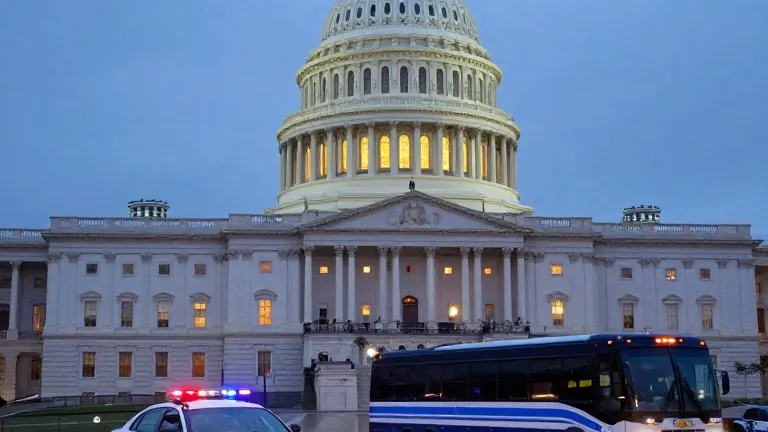
The election results, as of 4 p.m. EST on November 6, showed Democrats winning majorities in both chambers. Democrats picked up at least 43 House seats and seven Senate seats. This gave them a majority of at least 250-157 in the House and 54-44 in the Senate. The loss of 42 House seats fell short of the 48 needed for a wave election in that chamber, though uncalled races could change the total.
Republicans suffered a net loss of at least seven Senate seats, which qualified the year as a wave election by historical standards. Democrats also won a plurality of state government trifectas and a majority of governorships for the first time since before 2010. These results placed the election in the top 20% of years for seat swings against a sitting president's party.
Following the vote, Trump suggested fraud was a possibility. Major news organizations and election officials reported that the process was proceeding smoothly. The president's claims added uncertainty to the final tallies, even as core results remained consistent across reporting agencies.
In a briefing, Trump addressed the political fallout and the impeachment threat facing Defense Secretary Pete Hegseth. He called Rep. Thomas Massie, who filed the resolution, a loser with a lot of hatred in his heart. He defended the administration's actions in the Middle East, arguing that the timing of the impeachment push was inconvenient for allies and enemies.
New Democratic congressional leaders are preparing to use oversight and appropriations powers to challenge the administration. They plan to push back on key policies, including the dismantling of the Department of Education. They aim to use federal funding to rein in executive actions affecting schools and universities.
Republicans, who remain in the majority until the new Congress convenes in January, expressed frustration at the Hegseth impeachment vote. House Speaker Mike Johnson called it a terrible look for the country. Senate Majority Leader John Thune indicated that the Senate would deal with the matter accordingly. Democrats control both chambers and have the tools to investigate, fund, or defund specific initiatives as the new session approaches.
More Politics · National news · Report a business · Got a Story?